
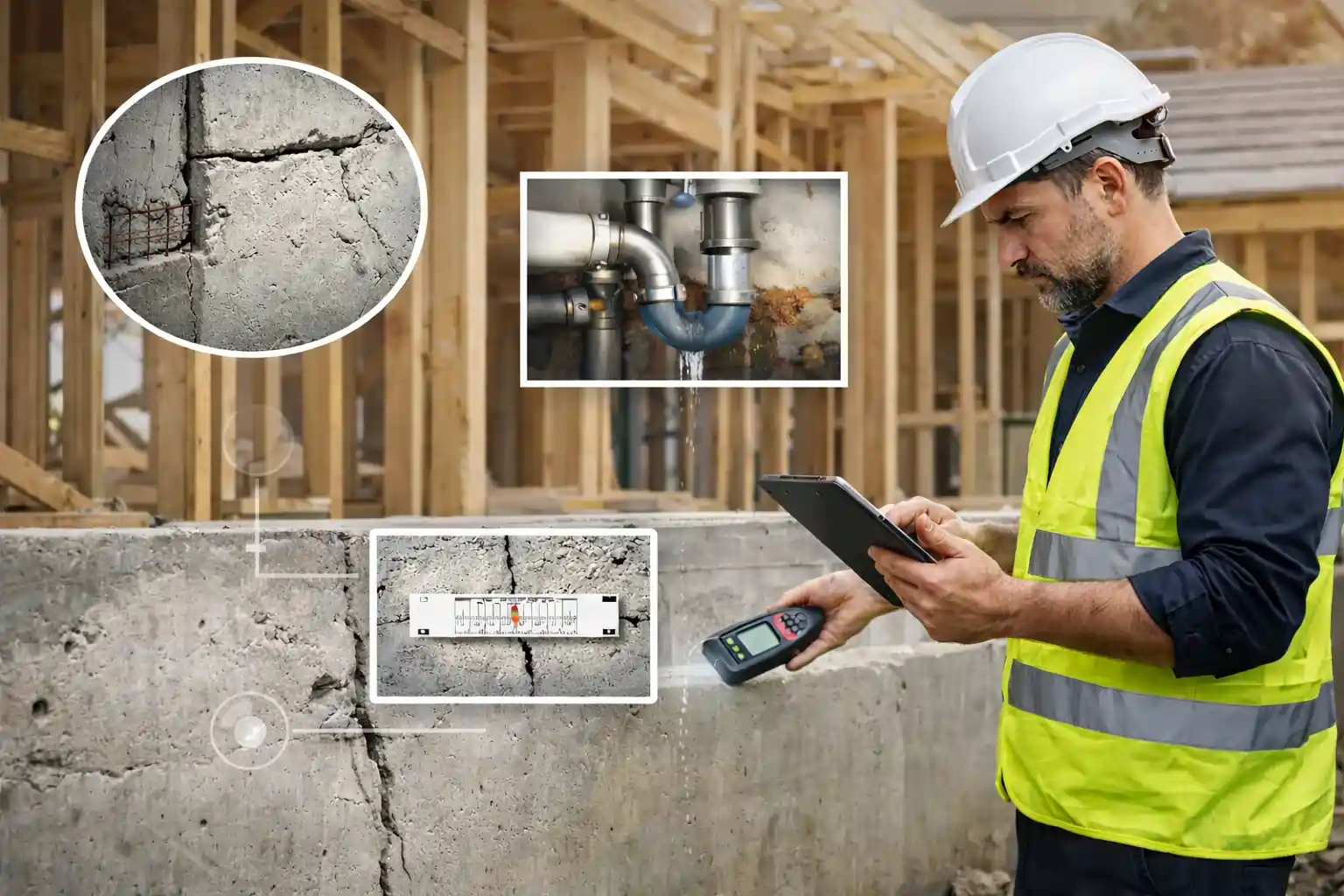
Building your dream home is exciting, but it comes with a risk that many owners only discover when it is too late: hidden construction defects. What seems like a minor issue during the build can transform into a major structural problem that costs tens of thousands of dollars to repair.
Construction stage defect assessments are your insurance policy against these costly surprises. By identifying defects early in the construction process, you prevent minor issues from escalating into problems that can compromise safety and blow out your budget.
According to the Australian Construction Industry report, structural defects can increase the overall cost of a construction project by up to 20%. This sobering statistic underscores the importance of thorough inspections at every stage of construction, from foundation to final finishes.
The best time to find a construction defect is before it gets covered up by the next stage of work. Once walls are closed up, detecting and fixing problems becomes exponentially more expensive.
The 5 Stages of Construction and Common Defects
Understanding the different stages of construction and the types of defects that can occur at each phase is essential for effective quality control. Each stage presents unique challenges and opportunities for defect detection.
| Construction Stage | Key Activities | Common Defects |
|---|---|---|
| Pre-Construction | Design planning, material selection, permits | Improper planning, inadequate specifications, overlooked permits |
| Foundation and Substructure | Excavation, footings, slab pouring | Improperly poured concrete, unstable soil, poor drainage |
| Superstructure | Framing, walls, roof structure | Frame misalignment, improper materials, inadequate reinforcement |
| Interior Finishing | Plumbing, electrical, insulation, HVAC | Plumbing leaks, electrical faults, insulation problems |
| Exterior Finishing | Roofing, waterproofing, landscaping | Improper roofing, faulty waterproofing, drainage issues |
Stage 1: Pre-Construction
The pre-construction phase involves design planning, material selection, and obtaining necessary permits. While this stage does not involve physical construction, defects in planning can have far-reaching consequences throughout the project.
Common defects during pre-construction include:
- Improper planning that fails to account for site conditions
- Inadequate specifications that lead to material quality issues
- Overlooked permits or non-compliance with local regulations
- Insufficient structural engineering calculations
Poor planning at this stage can result in structural misalignments, material failures, and costly redesigns during construction. Engaging qualified professionals to review plans and specifications before construction begins is essential.
Stage 2: Foundation and Substructure
The foundation and substructure phase is the critical groundwork upon which the entire building rests. Defects at this stage affect the stability and longevity of the entire structure.
Key issues to monitor during foundation work include:
- Improperly poured concrete: Incorrect mix ratios, inadequate curing time, or poor compaction
- Unstable soil: Insufficient soil testing or failure to address reactive soil conditions
- Poor drainage: Inadequate waterproofing or drainage systems around footings
- Foundation settlement: Uneven settling due to soil conditions or construction errors
Soil testing by qualified geotechnical engineers determines the ground's stability and load-bearing capacity. This testing is essential for designing appropriate footings and foundation systems that will support the structure safely.
Stage 3: Superstructure
The superstructure stage involves constructing the building's frame or skeleton, including walls, floors, and roof structure. This phase requires precise measurements and quality materials to ensure structural integrity.
Critical defects to identify during superstructure construction include:
- Frame misalignment: Even minor misalignments can cause significant long-term problems including uneven floors and cracking walls
- Improper materials: Use of undersized or substandard timber or steel members
- Inadequate reinforcement: Missing or incorrectly placed steel reinforcement in concrete elements
- Connection failures: Improperly installed brackets, ties, or connectors
Professional inspectors use laser levelling equipment and plumb bobs to verify alignment and ensure the frame meets engineering specifications. Detecting and correcting misalignments at this stage is far more cost-effective than addressing problems after completion.
Stage 4: Interior Finishing
The interior finishing stage is where many hidden defects can emerge or become concealed behind walls and ceilings. This phase includes plumbing, electrical, insulation, and HVAC installation.
Common defects during interior finishing include:
- Plumbing issues: Misaligned pipes, inadequate joints, and potential leak points that can cause water damage
- Electrical faults: Loose wiring, improper connections, and code violations that create fire hazards
- Insulation problems: Gaps, compression, or incorrect installation reducing thermal performance
- HVAC failures: Undersized systems, poor ductwork installation, or inadequate ventilation
The rough-in phase, before walls are closed up, is the critical time for inspection. Once plasterboard is installed, accessing and repairing these systems becomes significantly more expensive and disruptive.
Stage 5: Exterior Finishing and Final Inspections
The exterior finishing stage completes the building envelope with roofing, waterproofing, cladding, and landscaping. This phase is particularly important in Australian climates where heavy rainfall and extreme temperatures test the building's weather resistance.
Key areas of concern during exterior finishing include:
- Roofing defects: Gaps between tiles or sheets, improper flashing installation, inadequate fixing
- Waterproofing failures: Incorrect membrane application, failed joints, or inadequate coverage in wet areas
- Cladding issues: Poor installation, inadequate weatherproofing, or incorrect expansion allowances
- Drainage problems: Inadequate site drainage, incorrect falls, or blocked stormwater systems
Water ingress through poorly installed roofing or waterproofing causes mould growth, structural rot, and significant damage to interior finishes. These defects are particularly concerning in regions with heavy rainfall.
Common Construction Defects and Detection Methods
Understanding the most common types of construction defects and how they are detected helps property owners and project managers know what to look for during inspections.
| Defect Type | Warning Signs | Detection Methods |
|---|---|---|
| Structural frame alignment | Uneven floors, doors not closing properly, visible lean | Laser levels, plumb bobs, spirit levels |
| Concrete defects | Cracking, spalling, honeycombing, discolouration | Visual inspection, compression testing, core sampling |
| Plumbing issues | Water stains, dampness, slow drainage, odours | Pressure testing, pipe cameras, moisture meters |
| Electrical faults | Flickering lights, warm outlets, tripping breakers | Electrical testers, thermal imaging, circuit testing |
| Waterproofing failures | Water stains, bubbling paint, mould, efflorescence | Flood testing, moisture meters, thermal imaging |
| Roofing defects | Leaks, damaged tiles, rusted fixings, sagging | Visual inspection, water testing, drone inspection |
Concrete Strength and Curing Issues
Concrete defects are among the most serious issues that can affect a building's structural integrity. Temperature and humidity control during curing is essential for achieving proper concrete strength.
- Cracking: Can indicate excess pressure, poor curing, or improper mix ratios
- Spalling: Surface deterioration often caused by moisture penetration and reinforcement corrosion
- Honeycombing: Voids in concrete caused by poor compaction or segregation of materials
- Low strength: Results from incorrect mix ratios, inadequate curing, or contamination
Compression testing machines verify concrete strength meets engineering specifications. Core samples may be extracted for laboratory testing if there are concerns about concrete quality.
Foundation Stability Evaluation
A stable foundation is the cornerstone of any successful construction project. Foundation stability evaluation involves several methods to ensure the ground and foundation can safely support the structure.
Geotechnical Testing
Qualified geotechnical engineers conduct soil testing to determine:
- Soil composition and classification
- Load-bearing capacity of the ground
- Groundwater levels and drainage characteristics
- Reactive soil conditions that may cause movement
Foundation Monitoring Methods
- Levelling instruments: Monitor foundation position and detect any movement or settlement
- Soil compaction tests: Verify fill material is adequately compacted to support loads
- Laser levels: Confirm foundation surfaces are level and within tolerance
- Settlement monitoring: Track any foundation movement over time
Compliance and Documentation Requirements
Construction projects in Australia must comply with the National Construction Code (NCC) and relevant Australian Standards (AS). Proper documentation of defects and corrective actions is essential for legal compliance and quality assurance.
Key Regulatory Requirements
- National Construction Code (NCC): Sets minimum requirements for safety, health, amenity, and sustainability
- Australian Standards: Provide detailed technical specifications for materials and workmanship
- Work Health and Safety Act: Ensures safe construction practices and site management
- Environmental regulations: Address stormwater management, waste disposal, and site protection
Defect Documentation
Thorough documentation of identified defects should include:
- Detailed description of the defect and its location
- Photographic evidence with date stamps
- Assessment of severity and potential impact
- Recommended corrective actions
- Timeline for remediation
- Sign-off confirmation once repairs are completed
Corrective Action Recommendations
When defects are identified, prompt corrective action prevents further deterioration and additional costs. The approach to remediation depends on the type and severity of the defect.
| Defect Category | Corrective Actions | Prevention Measures |
|---|---|---|
| Framing misalignment | Beam and stud repositioning, laser level verification | Regular alignment checks during construction |
| Foundation cracks | Structural fillers, sealants, underpinning, re-levelling | Proper soil preparation and drainage |
| Plumbing defects | Joint repair, pipe replacement, pressure testing | Rough-in inspection before wall closure |
| Electrical issues | Rewiring, connection repair, safety testing | Licensed electrician inspection at rough-in |
| Waterproofing failures | Membrane repair or replacement, joint sealing | Independent waterproofing inspection |
Benefits of Construction Stage Inspections
Investing in professional construction stage inspections provides significant benefits throughout the project lifecycle and beyond.
Cost Savings
- Early defect detection prevents expensive repairs after completion
- Avoids the cost of demolishing finished work to access hidden defects
- Reduces risk of project delays caused by major defect rectification
- Protects against potential legal costs from defect-related disputes
Quality Assurance
- Ensures workmanship meets Australian Standards and NCC requirements
- Provides independent verification of builder performance
- Documents construction quality for warranty purposes
- Identifies issues before they affect subsequent construction stages
Peace of Mind
- Confidence that your investment is protected
- Independent professional assessment separate from builder
- Clear documentation of construction quality
- Early warning of potential problems
Frequently Asked Questions
What is a construction stage defect assessment?
Short answer: A professional inspection conducted at key stages during construction to identify defects before they become hidden behind finished surfaces.
Construction stage defect assessments are systematic inspections performed at critical points during the building process. These inspections examine workmanship quality, compliance with plans and specifications, and adherence to Australian Standards and the National Construction Code. By identifying defects early, issues can be corrected while access is still available and before they cause problems for subsequent construction stages or become concealed within the finished building.
How many stage inspections should I have during construction?
Short answer: Most residential projects benefit from four to six inspections at key stages including slab, frame, lock-up, fixing, and practical completion.
The number of inspections depends on the project complexity and value. Standard residential construction typically requires inspections at slab stage (before concrete pour), frame stage (before cladding), lock-up stage (when the building is weather-tight), fixing stage (before plasterboard installation), and practical completion. Larger or more complex projects may require additional inspections. Each inspection targets specific elements that will become inaccessible once subsequent work is completed.
What is the most critical stage for defect detection?
Short answer: The frame stage and rough-in stage are most critical as structural and services defects become hidden once walls are closed up.
While all stages are important, the frame and rough-in stages are particularly critical because structural framing, plumbing, and electrical work will be concealed behind wall linings. Defects in these areas are extremely expensive to repair once the building is completed, often requiring demolition of finished surfaces to access the problem. Waterproofing inspection in wet areas is equally critical as failures can cause extensive damage and are difficult to rectify after tiling is complete.
How much do construction stage inspections cost?
Short answer: Individual stage inspections typically cost $300 to $600 each, with package deals for multiple inspections offering better value.
The cost varies depending on the property size, location, and scope of inspection. Many inspection companies offer package deals covering all construction stages at a reduced total cost compared to booking individually. When compared to the potential cost of defect rectification, which can reach tens of thousands of dollars or more, stage inspections represent excellent value for protecting your investment. The cost is insignificant relative to the total construction cost and potential savings from early defect detection.
Can I attend the construction stage inspection?
Short answer: Yes, attending inspections is recommended as it allows you to understand any issues and ask questions directly.
Most inspection companies welcome owner attendance at inspections. Being present allows you to see any defects firsthand, understand their significance, and ask questions about construction quality. However, ensure you have appropriate permission to be on the construction site and follow all safety requirements. Even if you cannot attend, you will receive a detailed written report with photographs documenting all findings.
What happens if defects are found during a stage inspection?
Short answer: Defects are documented in a detailed report which you present to your builder for rectification before work proceeds.
When defects are identified, the inspector provides a comprehensive report including descriptions, photographs, locations, and severity assessments. You then present this report to your builder and request rectification before the next stage payment is made or before subsequent work covers the defective areas. Most building contracts include provisions for defect rectification. Maintaining clear documentation protects your interests and provides evidence if disputes arise.
Are construction stage inspections the same as council inspections?
Short answer: No, council or certifier inspections focus on compliance with approval conditions, while independent inspections assess overall quality and workmanship.
Mandatory inspections by council or private certifiers confirm the work complies with the building approval and relevant codes. However, these inspections have limited scope and do not comprehensively assess workmanship quality or identify all defects. Independent construction stage inspections provide a more thorough examination of construction quality, looking for defects and issues that may not cause code non-compliance but still affect the building's quality, durability, and value.
When should I book my first construction stage inspection?
Short answer: Book your inspection company before construction starts so they can schedule inspections at the appropriate times.
Engaging an inspection company early allows them to understand your project and schedule inspections at critical points. For the slab inspection, the inspector needs to examine the reinforcement and formwork before concrete is poured, which may only be accessible for a short window. Your builder should notify you and your inspector when each stage is ready for inspection. Establishing this process early ensures no critical inspections are missed.
Do I need stage inspections if I have a fixed-price contract?
Short answer: Yes, a fixed-price contract does not guarantee quality workmanship, and independent inspections protect your interests.
Fixed-price contracts set the project cost but do not ensure construction quality. Builders may use minimum specification materials or acceptable but not excellent workmanship to maintain margins. Independent inspections verify the work meets the contracted specifications and Australian Standards. Additionally, identifying defects during construction is easier to rectify than after completion when warranty claims may be disputed. Inspections protect your investment regardless of contract type.
What qualifications should a construction stage inspector have?
Short answer: Look for inspectors with building or engineering qualifications, relevant licensing, and professional indemnity insurance.
Qualified inspectors should hold relevant building industry qualifications such as a builder's licence, building inspection certification, or engineering degree. They should have practical experience in construction and be familiar with Australian Standards and the National Construction Code. Professional indemnity insurance protects you if the inspector fails to identify a significant defect. Membership in professional associations and positive reviews from previous clients are also good indicators of competence and reliability.
Should I withhold progress payments if defects are found?
Short answer: You should address defects before making progress payments, as your building contract typically ties payments to satisfactory completion of each stage.
Most building contracts in Australia require the builder to complete each stage to a satisfactory standard before payment is due. If your independent inspection identifies defects, you have grounds to request rectification before releasing the stage payment. Document all defects in writing with photographs and provide the report to your builder. Be reasonable about minor issues that can be addressed promptly, but stand firm on significant defects that could affect structural integrity or subsequent work.
What happens if my builder refuses to fix defects?
Short answer: Document everything and seek advice from your state's building authority or a construction lawyer if the builder refuses to rectify legitimate defects.
If your builder disputes defects identified in your inspection report, request a formal written response explaining their position. You may seek a second opinion from another qualified inspector. If the builder continues to refuse rectification of legitimate defects, you can lodge a complaint with your state's building authority such as NSW Fair Trading, QBCC in Queensland, or VBA in Victoria. For significant disputes, consulting a construction lawyer or building dispute resolution service may be necessary.
How do waterproofing inspections fit into stage inspections?
Short answer: Waterproofing inspection is a critical separate inspection that must occur after membrane application but before tiling in wet areas.
Waterproofing failures are among the most common and expensive defects in Australian homes. The waterproofing inspection should verify correct membrane application, appropriate overlap at joints, adequate height on walls, proper integration with fixtures and penetrations, and compliance with AS 3740. This inspection is often mandated by councils and must be completed by a licensed waterproofer or certifier. Once tiles are installed, waterproofing failures become extremely costly to repair.
Can I use stage inspection reports for warranty claims?
Short answer: Yes, stage inspection reports provide documented evidence of construction quality that can support warranty claims during the defects liability period.
Your stage inspection reports create a record of the property's condition at each construction phase. If defects emerge later that relate to issues present during construction, these reports provide evidence for warranty claims. In NSW and Queensland, statutory warranty periods of 6 years for major defects and 2 years for minor defects apply. Having independent inspection documentation strengthens your position when making claims against the builder or their warranty insurance.
Key Takeaways
- Construction defects can increase project costs by up to 20%, making early detection essential for protecting your investment.
- The five key construction stages each present unique opportunities for defect detection: pre-construction, foundation, superstructure, interior finishing, and exterior finishing.
- Frame stage and rough-in inspections are critical as defects become hidden once walls are closed up.
- Professional inspectors use specialised equipment including laser levels, moisture meters, and thermal imaging cameras.
- All construction must comply with the National Construction Code (NCC) and relevant Australian Standards.
- Thorough documentation of defects with photographs and descriptions is essential for rectification and legal compliance.
- Independent stage inspections are separate from and more thorough than mandatory council or certifier inspections.
- Stage inspection costs are minimal compared to potential defect rectification costs after completion.
References and Resources
- National Construction Code (NCC)
- Standards Australia
- Queensland Building and Construction Commission (QBCC)
- Victorian Building Authority (VBA)
- NSW Fair Trading
Protect Your Construction Investment
Do not let construction defects compromise your building project. Our licensed inspectors identify problems at every stage, helping you avoid costly repairs and ensuring your investment meets the highest quality standards.
Book a Construction Stage Inspection